Wednesday, January 23, 2013

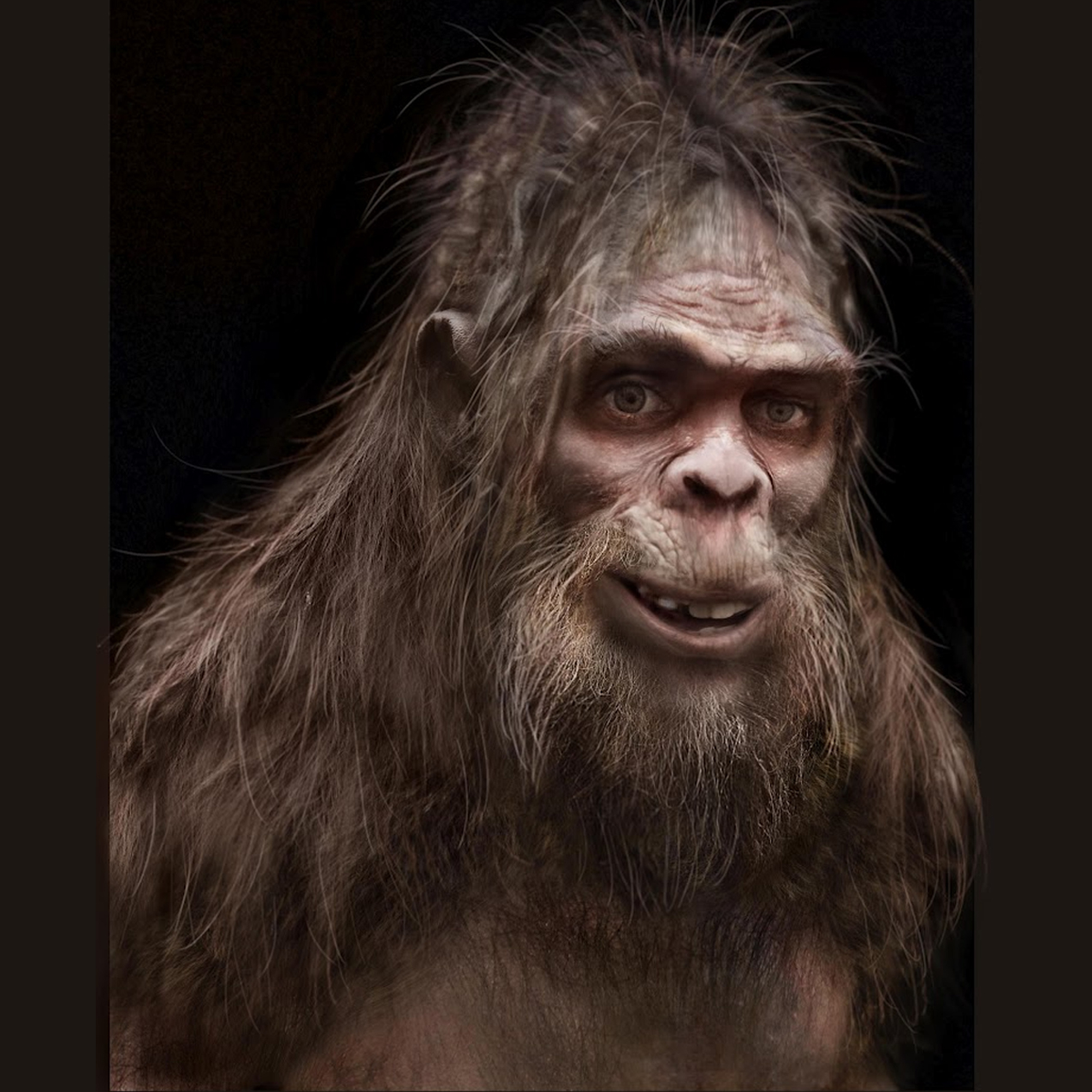
New Concept Art for Bigfoot Commercial

Bigfoot concept art option #5  by artist Constantine Sekeris (click to enlarge)
According to his publisher, "Constantine Sekeris has been drawing from the time he could hold a pencil. As a boy, through high school and into Art Center College of Design, he was influenced from comics to traditional master painters Alfonsa Mucha, Gustav Klimt, Bouguereau, Alma-Tedema, J.C. Lindecker, Norman Rockwell, Frank Frazetta to poster artist Drew Struzan. After graduating with a Bachelors in Illustration, he found his passion in creature design for films such as Bicentennial Man, Blade 2, League of Extraordinary Gentleman, Fantastic 4, X-Men the Last Stand, The Golden Compass, The Incredible Hulk, Hellboy, The Golden Army, Where the Wild Things Are, A Nightmare on Elm Street, Thor, Green Lantern and more to come."

"Constantine pushes himself like every artist to grow and learn his craft to the best of his ability and share his imagination with the world."

Bigfoot concept art option #6  by artist Constantine Sekeris (click to enlarge)

You can see more of Conatantine's work at his blog constantinesekerisdesign.blogspot.com. Even better, buy his book, "MetamorFX." at Amazon.com.


Today in Bigfoot History | JAN 23, 2008 | Bigfoot Found on Mars

Snapshot taken by NASA's Mars Rover
"Is this the picture that proves that there is life on Mars? And the existence of Bigfoot?" --The Telegraph

Today, January 23, in 2008 a picture taken by NASA's rover on Mars began to circulate as "Bigfoot on Mars" despite being four years old at the time.

The news hit the UK first with the The Telegraph reporting, "The photograph, taken in 2004 by the Mars explorer Spirit, appears to show a human shaped object that looks startingly like previous photographs purporting to have captured Bigfoot."

On this side of the Atlantic Ocean, a local ABC affiliate printed this in their Water Cooler section, "Recently, a space enthusiast enlarged a single frame from one of those images, and found a figure that some say resembles some sort of 'Bigfoot' creature."

For the rest of the day the photo went viral and finally made it to Anderson Cooper of CNN. Although Anderson Cooper found it laughable, he did interview a serious documentary director. Watch the video below.


Perhaps our favorite explanation for Bigfoot on Mars is our post we did a few months ago about a comic titled, "Bigfoot: Sword of the Earthman" The best tagline from the comic, "Bigfoot – Sword of the Earthman is not the story of how Bigfoot became a myth on Earth. It’s the story of how he became a legend of the stars."

A page from the comic, "Bigfoot – Sword of the Earthman"
You must buy this piece of Bigfoot pop-culture history! You can get your copy here, and get updates of future issues at BigfootComic.com.

Tuesday, January 22, 2013

Today in Bigfoot History | JAN 22, 1996 | Grover Krantz Advocates Killing Bigfoot

Grover Sanders Krantz was a professor of physical anthropology at Washington State University
"Someday down the line, 50 years from now, somebody by the rare chance might just stumble across the skeleton of a Sasquatch..." Grover Krantz

Today, January 22, 1996, the late Grover Krantz picks a side on the kill/no kill Bigfoot debate. Krantz's idea that in order to preserve the Bigfoot species, we need a specimen to understand it first. This is one of the most polarizing debates in Bigfooting. Some have argued that Grover's stance is a little more nuanced than any newspaper article can convey. There are also those that argue Krantz's view would be different today due to the advances in DNA. Either way, the debate continues to stir high emotions among the community. Read the article below that touches on arguments for both sides.
The Salt Lake Tribune

January 22, 1996

WALLA WALLA, Wash. -- Dr. Grover Krantz, anthropology professor at Washington State University, has touched off something of a controversy in Bigfoot circles by openly advocating the view that a specimen should be hunted down and killed. "Someday down the line, 50 years from now, somebody by the rare chance might just stumble across the skeleton of a Sasquatch, and then the government sends out masses of [chimpanzee researcher] Jane Goodall's granddaughters, and establishes definitely, they were there, but they're extinct," Krantz theorized. "Everybody will be standing around wringing their hands saying: `If only we knew they were real, we could have saved them.' Well, they could have been saved if only we would blow one away now. The first one who bags one should get a big, big prize. The second one should be hanged."

One opponent of Krantz's view is Peter Byrne, director of the Bigfoot Research Project at Oregon's Mount Hood. Byrne is a big-game hunter in the classic tradition -- Irish, with a good head of white hair and a penchant for khakis and wool sweaters. He spent a good part of his hunting-and-tracking career in Nepal before developing an interest in the Sasquatch and undertaking the first major organized Bigfoot expedition in Oregon in 1960.

It failed to produce a Sasquatch, but Byrne hasn't quit looking. He now spends much of his searching tracking down witnesses, carefully probing their stories for holes and sending investigators to look for corroborating evidence.

Please read our terms of use policy.